Quick Answer: Importing garlic from China involves 7 key steps: find a reliable supplier, request quotes and negotiate Incoterms, confirm order and payment terms, arrange production and quality inspection, load the container, handle customs clearance, and receive the goods. The standard MOQ is 1 x 40HQ Reefer Container (28MT), and the full process takes 3-7 weeks depending on destination.
China is the world's largest garlic producer, accounting for over 60% of global output. Shandong Province alone produces the majority of China's export-grade garlic, thanks to its ideal climate, rich soil, and mature cold-chain infrastructure. For importers, buying garlic directly from a Shandong-based exporter like ExCrop eliminates middlemen, reduces costs, and ensures product traceability from farm to container.
This guide walks you through every step of the garlic import process, from finding a supplier to receiving goods at your warehouse. Whether you are a first-time importer or an experienced trader looking to optimize your supply chain, this guide will help you navigate the process efficiently.
Step 1: Find a Reliable Garlic Supplier in China
The single most important decision in the garlic import process is choosing the right supplier. A reliable supplier ensures consistent quality, competitive pricing, proper documentation, and on-time delivery. A poor supplier choice can lead to quality disputes, shipment delays, and financial losses.
Supplier Verification Checklist
- Business License: Verify the supplier has a valid Chinese business license with agricultural product export scope. Request a copy and cross-check with the local commerce bureau.
- Export Qualifications: The supplier must have Customs AEO registration and the ability to obtain phytosanitary certificates from China Customs.
- Quality Certifications: Look for ISO 22000, HACCP, or Global GAP certification. These indicate the supplier follows international food safety management systems.
- Cold Storage Capacity: Garlic is harvested once a year (June) but sold year-round. A supplier with large cold storage facilities (5,000+ MT) can guarantee consistent supply and stable pricing even during off-season.
- Processing Facility: Visit or request photos of the supplier's processing plant — sorting lines, packing areas, and cold storage. A professional facility is a strong indicator of quality control.
- Export Track Record: Ask which countries the supplier currently exports to and request references from existing customers. A supplier exporting to 50+ countries has proven logistics capability.
ExCrop Profile: Heneng International Trade Group (Shandong) Co., Ltd. is based in Shandong, China. We are ISO and HACCP certified, operate large cold storage facilities, and export to 50+ countries across Africa, the Middle East, Southeast Asia, Europe, and the Americas. Contact us at contact@excrop.com for supplier verification documents.
Step 2: Request Quotes and Negotiate Terms
Once you have identified a supplier, request a formal quotation. A professional garlic quote should include: product variety (Normal White or Pure White), size specification (4.5cm-6.5cm+), packaging type, quantity, Incoterms (FOB/CIF/CNF), unit price, total price, loading port, and estimated shipment date.
Incoterms Comparison for Garlic Import
For first-time importers, CIF terms are recommended because the supplier handles shipping arrangements and insurance, reducing your logistics burden. As you gain experience and build relationships with freight forwarders, switching to FOB Qingdao can save $200-500 per container by negotiating your own freight rates.
Step 3: Confirm Order and Payment Terms
After agreeing on price and Incoterms, sign a formal Sales Contract (or Proforma Invoice) that specifies all terms in writing. This document serves as the legal basis for the transaction and is required by banks for payment processing.
Common Payment Methods
The 30% T/T deposit + 70% against B/L copy structure is the industry standard for garlic trade. The deposit allows the supplier to purchase raw materials and begin production, while the balance payment after receiving the Bill of Lading copy ensures the buyer has proof that the goods have been shipped before releasing final payment.
Step 4: Production and Quality Inspection
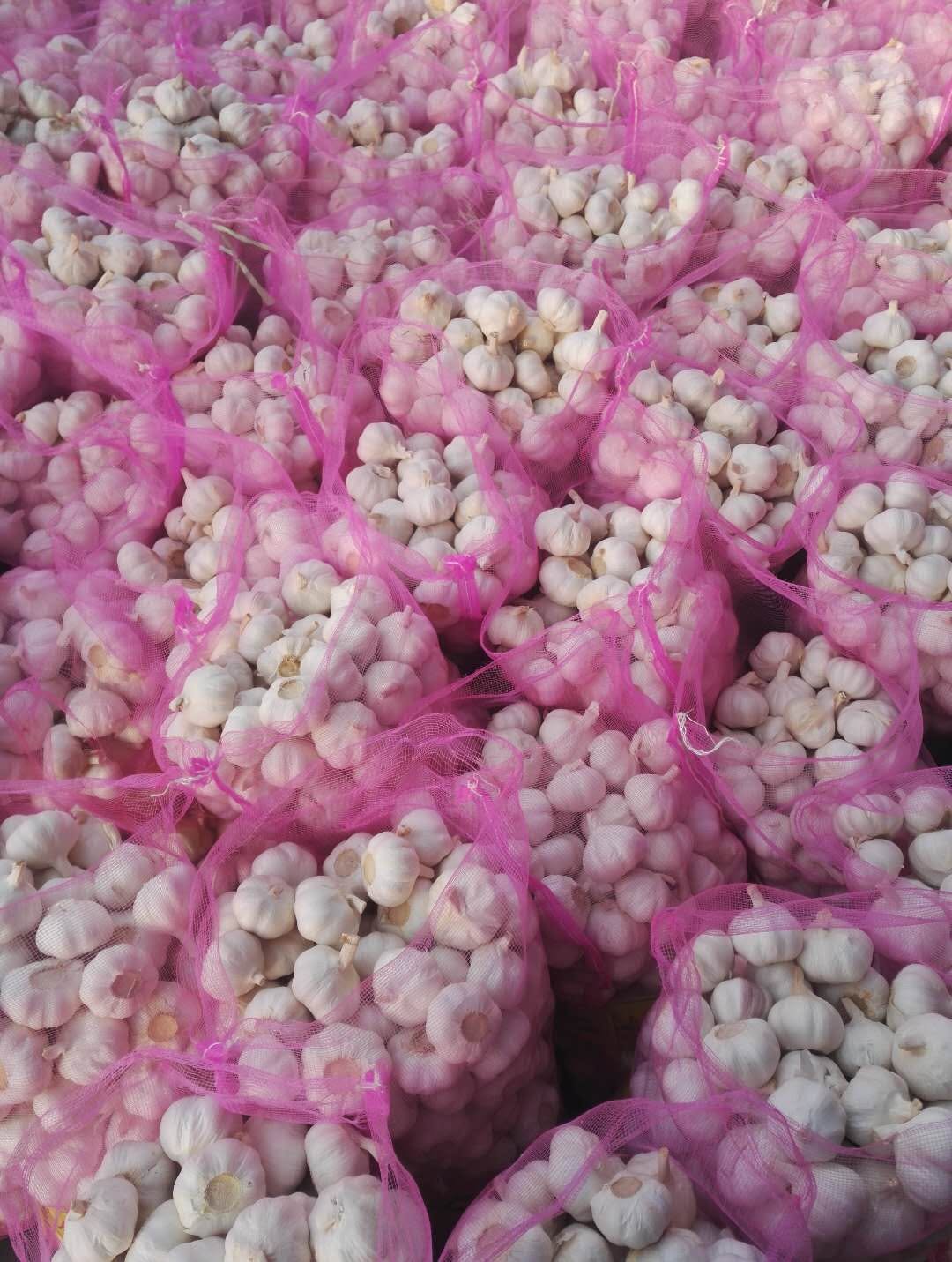
After receiving the deposit, the supplier begins production: sourcing garlic from cold storage, sorting by size, packing into mesh bags or cartons, and pre-cooling the packed garlic to -2°C to -3°C. This process typically takes 5-7 days for a single 40HQ container.
Quality Inspection Options
- Supplier Self-Inspection: The supplier's own QC team inspects and provides a quality report with photos. Included free of charge.
- SGS Inspection: Independent third-party inspection by SGS, the world's leading inspection company. Verifies size grading, moisture content (≤7%), sprout rate (≤1%), root length (≤1cm), and visual quality. Cost: $300-500 per container.
- BV (Bureau Veritas) Inspection: Similar to SGS, provides independent quality verification with internationally recognized certification.
- Buyer On-Site Inspection: The buyer or their agent visits the supplier's facility to inspect in person. Most thorough but requires travel time and cost.
Recommendation: For first-time orders, always book SGS or BV inspection. The $300-500 cost is minimal compared to the value of a 28MT container ($20,000-30,000) and provides peace of mind that the garlic meets your specifications before it leaves China.
Quality Standards to Verify
- Size conformity: Bulbs match the ordered diameter specification (e.g., 5.5cm means all bulbs ≥5.5cm)
- Moisture content: ≤7% (prevents mold during transit)
- Sprout rate: ≤1% (sprouted garlic has reduced shelf life and market value)
- Root length: ≤1cm (excessive roots trap moisture and reduce pack density)
- Skin coverage: ≥90% for Pure White, ≥80% for Normal White
- No mold, rot, or pest damage
- Foreign matter: None (soil, stones, plant debris)
Step 5: Container Loading and Shipping
After quality inspection passes, the garlic is loaded into a 40HQ reefer container at the supplier's facility or at Qingdao Port. The container is pre-cooled to -2°C to -3°C, loaded with the garlic, sealed, and transported to Qingdao Port for vessel loading.
The loading process should be documented with photos at each stage: empty container condition, pre-cooling temperature display, loading progress (25%, 50%, 75%, 100%), final seal number, and container number. Request these photos from your supplier as proof of proper loading.
Transit Times from Qingdao Port
Step 6: Customs Clearance and Documentation
Upon vessel departure, the supplier sends you the shipping documents. You need these to clear customs at the destination port. Work with a licensed customs broker in your country to handle the import clearance process.
Required Document Checklist
The Certificate of Origin is particularly important if your country has a Free Trade Agreement (FTA) with China. For example, ASEAN countries can enjoy reduced or zero tariff rates on garlic imports with a valid CO Form E. Check with your customs broker whether an FTA applies to your shipment.
Step 7: Receive Goods and Post-Delivery
After customs clearance, arrange inland transport from the port to your warehouse. Upon arrival, inspect the goods immediately:
- Check container temperature log (reefer units record temperature throughout the voyage)
- Verify carton/bag count matches the packing list
- Random sample 5-10 bags/cartons for quality check (size, moisture, appearance)
- Photograph any damage or quality issues immediately for insurance claims
- Transfer garlic to cold storage at 0°C to -2°C as soon as possible
Pro Tip: Keep the reefer container plugged in at your facility until you are ready to unload. The container can maintain -2°C to -3°C for several days while plugged into a power supply, giving you time to arrange cold storage space.
Frequently Asked Questions
Ready to Start Importing Garlic?
ExCrop provides end-to-end garlic export services from Shandong, China. From quality inspection to container loading and documentation, we handle it all.
WhatsApp Us Get a Quote